Showing posts with label music video. Show all posts

29 August 2022

Southpaw (サウスポー, 2019)


I first saw this delightful music video when the director and animator Sawako KABUKI (冠木佐和子) first posted it on YouTube back in 2019. When it screened at the Hiroshima Animation Season as part of the Japan Animation Association (JAA) selection Dive into the Sea of Japanese Independent Animation!, it stood out from the other films for its exceptional use of humour and movement. 

Kuricorder Quartet - SOUTHPAW | Music Video from SAWAKO KABUKI on Vimeo.

The video was commissioned by Kuricorder Quartet (栗コーダーカルテット): a quirky, multi-instrumental band featuring recorders (soprano, alto & great bass) and many other instruments. Since 2015, when Kenji KONDŌ left the band, they have actually been a trio but did not change their name. They are known in particular for doing covers of popular music and writing and performing film and TV soundtracks. Southpaw (サウスポー, 2019) is Kuricorder’s cover of the duo Pink Lady’s 1978 hit song “Southpaw” – which is said to have been inspired by the left-handed baseball pitcher Tomotsu NAGAI who played for the Crown Lighter Lions (now known as the Saitama Seibu Lions). When performing the song on television, Mie and Kei of Pink Lady wore glittery pink and white disco interpretations of baseball uniforms. 


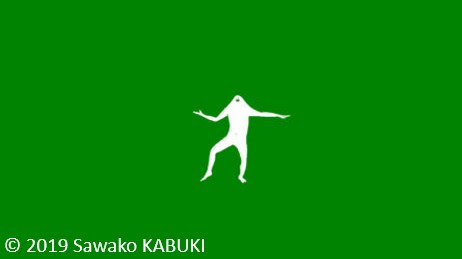
No doubt inspired by the amazing choreography of Pink Lady, Kabuki chose to use dance as the main theme of her music video. She filmed fellow animator Manabu HIMEDA (whose delightful 45R Official Site Animation also featured in the JAA program) dancing and rotoscoped him into neckless humanoid character. A master of metamorphosis, Kabuki multiplies the dancing figure and positions the multiple figures in various moving patterns on the screen – always in perfect time with the rhythm of the piece and dynamically capturing the spirit of the performance. The audience was moved to gales of laughter. In a short amount of time Sawako is able to evince precisely that irrepressible urge to dance one feels when one hears a song like that really slaps (to use the modern lingo). 

 2022 Cathy Munroe Hotes

24 April 2020

The World of Ryōji Yamada / 山田遼志の世界


The World of Ryōji Yamada / 山田遼志の世界
 http://ryojiyamada.com/
 https://vimeo.com/ryojiyamada

In the “before times”, when we were still able to meet in small groups in Japan, I was able to attend one of the The World of Ryōji Yamada ( 山田遼志の世界) special screening events hosted by tampen.jp. The screening selection featured a mix of Yamada’s acclaimed animated shorts and his commissioned works (music videos).

Waiter (2014)
Popping, Mixing (2012)
LaLaLa Brothers (2011)
Keita SANO’s ‘Mad Love’ (music video, 2017)
King Gnu’s ‘Prayer X’ (music video, 2018)
Doodle Project II (2019)
Kicell’s ‘Hitotsu dake Kaeta’ / キセル「ひとつだけ変えた」(music video, 2018)
Natsu to Suisei’s ‘27th’ / 夏と彗星「27th」 (music video, 2020)
WONK’s ‘Cyberspace Love’ (music video, 2017)
Hunter (2017)
handshake (2018)
Firehead (2019)

Yamada has an MFA in Animation from Tama Art University, and in 2018-2019 he had the opportunity to live in Germany as a Trainee Japanese Council Affair of Culture. During this time was a guest student of Andreas Hykade at the Filmakademie Baden-Württemberg, and he was able to join us at Nippon Connection for a screening of his film Hunter.

I went to the event to see the film Yamada made in Germany, Firehead. I am glad that I did because I had never sat down and watched a selection of Yamada’s films altogether before and it was interesting to see how his style has developed over the years. I was also impressed by Yamada’s ability to adjust his style to suit the needs of his clients in the commissioned music videos.

Music is an integral part of Yamada’s films and the music for his independent works are composed by his long time collaborator Makoto Takahashi. I purchased a CD of the music Takahashi composed for the films at the event and it came with a fold-out poster featuring Yamada’s art.

Apart from Firehead, all the other films from the screening can be found online and I have assembled them for you below (plus the trailer for Firehead). The discussions with the director from the screenings can be found on tanpen’s YouTube Channel (JP only)


Waiter from Ryoji Yamada on Vimeo.


Doodle Project II (2019) from Dante Zaballa on Vimeo.


HUNTER from Ryoji Yamada on Vimeo.


handshake from Ryoji Yamada on Vimeo.


FIREHEAD Trailer from Ryoji Yamada on Vimeo.

Cathy Munroe Hotes 2020

23 April 2020

Affordance (アフォーダンス, 2016)


Hayato Nove (野辺ハヤト, b. 1971) is a graphic designer and illustrator by profession. Along with his web designer wife Tomoko Nobe (野辺智子), he has his own company breath piece which specialises in illustration, album cover design, web design, logos and other art projects. In addition to these commercial endeavours, Nove is also an artist and musician. In recent years, he has experimented with the medium of animation. Affordance (アフォーダンス, 2016) is his second film after his 2013 work Caterpillar (watch here). It was a part of the animation selection that I curated for Nippon Connection in 2017, and we were lucky enough to have Nove join us at the screening and answer questions about the film.
The term “affordance” is relatively new to the English language. It was coined by the late American psychologist James J. Gibson in a 1977 article entitled “The Theory of Affordances” and explored more deeply in his 1979 book The Ecological Approach to Visual Perception. Gibson is considered one of the key 20th century researchers in the field of visual perception, with his work exploring how we see the world we do. Affordance pertains to how our perception of an object defines the possibilities of how it can or should be used. Thus, the concept of affordance is a key one in design (See: Don Norman, “Affordances and Design”, and Nove encountered the term during his studies at Musashino Art University.

Using Nove’s characteristically minimalist monochrome palette, Affordance is a mesmeric film, weaving in and out between simple line drawings to elaborate patterns of movement and metamorphosis. The varying pace of the animation is matched by the soundtrack, which was composed and performed by the artist himself .

You can immerse yourself in Nove’s unique poetic vision on Vimeo now:

Nove is currently working on his latest work Parallax, due out sometime this year.  Watch the trailer:


Cathy Munroe Hotes 2020

24 March 2020

Playlist: Music of the Visual World


With so many people in the world being housebound at the moment due to the covid-19 epidemic, I thought I would put together some playlists for people who love animation as much as I do.  

I am starting with the selection that I put together for Nippon Connection in 2018, as most of the films can be found on line. The theme that year was music, so I have included links to the artists whose music features in the animations, so you can also support these musicians by streaming / buying their music during this difficult time of cancelled live events.

The first work in the programme, Moving Colors, is a group project featuring the work of 12 animation creators (aka Taku Team) with each team member representing their favourite colour. The title design is by Taku Furukawa (the Taku of the Team name), experimental animation pioneer and mentor to the professional animators in the team. The team consists of: Takuma Hashitani (orange), Waboku (aka Wataru Nakajima, brown), Hakhyun Kim (purple) Yoshiyuki Kaneko (black), Shiho Morita (red), Moe Koyano (raspberry/turquoise), Yū Tamura (green), Yasuaki Honda (crimson), Yewon Kim (mint), Tomoyoshi Joko (blue) and Hiroco Ichinose (gold).

Moving Colors by TAKU TEAM, 2016


Cosmic by Hiroco ICHINOSE of Decovocal, 2009


How Low Sympathy
by Decovocal / Music by scenarioart, 2014


Slowly Rising
by Hideki INABA / Music by BEATSOFREEN (aka Stan Forebee), 2015


Slowly Rising from kanahebi on Vimeo.


On + On
by Akihiko TANIGUCHI / Music by Cumhur Jay, 2016


Cumhur Jay - On & On - "Dyschronometria" from Akihiko Taniguchi on Vimeo.


The State of Things
by Ryo ORIKASA / Music by Tamaki Roy, 2017


Polly
by Sarina NIHEI / Music by Whitney, 2016


Whitney - Polly (Official Music Video) from Sarina Nihei on Vimeo.


Mad Love
by Ryōji YAMADA / Music by Keita SANO, 2017


La Madrague “Country of Westering Sun” マドラグ(西陽の国)
by Yuki HAYASHI / Music by youcan ゆーきゃん, 2017 
- the music video is not available online at the moment, but the song can be streamed


What is available online is an earlier work by Hayashi: his music video for moskitoo's Fragments of a Journey (2014), which screened in my 2015 Nippon Connection selection.


The Synesthesia Ghost
共感覚おばけ
by Atsushi MAKINO / Music by Sasanomaly, 2015


I’ve Got to Take the Laundry In
洗濯物をとりこまなくちゃ
by Naoya SANUKI / Music by Siamese Cats, 2016


Enjoy Music Club
by Whoppers (Naoya SANUKI and Zuck), 2017


Spring Time - Old Man 青春おじいさん
by Hōji TSUCHIYA / Music by Uri NAKAYAMA, 2017


A Long Dream
by Hōji TSUCHIYA, 2016


Oldman Youngman 加賀遼也 
by Ryoya KAGA, 2016


lilac (bombs Jun Togawa)
by ONIONSKIN / Music by Vampillia, 2015


Nandaka Mou なんだかもう
by ONIONSKIN / Music by Kidori Kidori, 2016


TO & KYO とう と きょう
by Tsuneo GODA, 2017


2020 Cathy Munroe Hotes

07 November 2018

NC2018 Animated Shorts 4: Slowly Rising by Hideki Inaba


Nippon Connection 2018 Animated Shorts 4: Slowly Rising by Hideki Inaba 

Hideki Inaba (稲葉 秀樹, b. 1988)’s Slowly Rising came to my attention because the film was part of the Jury Selection at the Japanese Media Arts Festival 2017. Inaba is originally from Ibaraki Prefecture but is now based in Tokyo where he works as a freelance video artist. He has had a lot of success in the past couple of years, participating as part of the filmmaking team that did the animated special effects for the Red Hot Chili Peppers’ Getaway Tour and having his work featured at many international festivals and online media platforms.

Slowly Rising from kanahebi on Vimeo.

Slowly Rising is a music video for the Dutch artist formerly known as BEATSOFREEN, now using the moniker Stan Forebee (Beatsofreen is an anagram of this name). Forebee is based in Melbourne, Australia. He describes himself as a beatmaker and multi-instrumentalist who grew up immersed in jazz and classical music in a musical family in the Netherlands. In March, he released his debut jazz album Jazz Sessions and he promises another album in the near future. 

On the Japanese Media Arts Festival Website, Inaba describes the music video thusly: “Under the sun that is the source of life, a single seed is born. Seeking light, the seed forms a group that gradually increases in numbers, then dies off. Another seed then grows in its place. The creator brings a cel animation touch to a story that overlays human relations in the corporate world with the rise and fall of living organisms.” (source). 

The film begins as simply as the music, with plant-like fronds waving against a starlit, other-worldly galaxy. As the music becomes more layered, the variety of imaginary organic creatures multiplies – some resemble plants, others pulsing sea creatures, and still others flying insects. They fill the screen like a colourful, ever-changing kaleidoscope. The result is a hypnotic video as entrancing as the music itself. 

Learn more about Inaba (username: kanahebi): 

Daibutsu Animation Club: 

Learn more about Stan Forebee: 

2018 Cathy Munroe Hotes

NC18 Animated Shorts 3: How Low Sympathy by Decovocal


Nippon Connection 2018 Animated Shorts 3: How Low Sympathy by Decovocal  

How Low Sympathy (ハロウシンパシー) is a music video for the three-piece Japanese band Scenarioart (シナリオアート). The band is from Kansai and features Kōsuke Hayashi (@kosukedao) on guitar and vocals, Kumiko Hattori (@drumkumiko) on drums and vocals and Yakahisa Yamashita (@yamapio) on bass and vocals. Their music demonstrates the influence of rock, electronica, and shoegaze pop. Their first single, Raincoat Man was released in 2013 and their single Sayonara Moon Town featured in the end credits of the popular anime series Boruto: Naruto Next Generations. The single How Low Sympathy can be found on their debut studio album Happy Umbrella.

How Low Sympathy | ハロウシンパシー from Decovocal on Vimeo.

How Low Sympathy is animated by the husband and wife team Decovocal (デコボーカル): Tomoyoshi Joko (上甲トモヨシ and Hiroco Ichinose (一瀬皓コ). I wrote about Ichinose and Decovocal in my last post about (read here), so for this post I will focus on the other half of the team. Like his wife, Joko also studied at Tokyo Polytechnic University where he was mentored by art animator Taku Furukawa (古川タク). I first wrote about him back in 2011, when my kids fell in love with his animation short Lizard Planet (read more). Joko has a remarkable ability create fantastic visual worlds using simple line drawing and computer colouring techniques. In addition to Lizard Planet, his film Buildings (2008) is clever and engaging. 

This combination of originality of design and colourful aesthetic has led to a successful carrier in commercial animation design. In addition to music videos, Decovocal make animation for television and advertising. 

Check out the work of Decovocal on their official channels: 

Learn more about Scenarioart: 

2018 Cathy Munroe Hotes 

22 September 2018

Nippon Connection 2018 Animated Shorts 1: Moving Colors by Taku Team


The theme of my selection at Nippon Connection this year was music. As most of my readership is outside of Germany, I know that many of you were disappointed not to be able to see the screening. Fortunately, most of this year’s selection can be found uploaded by the animators or the people who commissioned the animations on their official platforms. This is the first in my series highlighting this year’s selection. I will embed each video and give a little background about the artists involved.

Moving Colors from Decovocal on Vimeo.

The first work in the programme, Moving Colors, is a group project featuring the work of 12 animation creators (aka Taku Team). It is a tribute to the animator Taku Furukawa (古川タク, b. 1941) by young artists who were mentored by him at Tokyo Polytechnic University’s undergraduate animation programme. Each team member in this collaboration represents their favourite colour. The title design is by Furukawa himself. The team features: Takuma Hashitani (orange), Waboku (aka Wataru Nakajima, brown), Hakhyun Kim (purple) Yoshiyuki Kaneko (black), Shiho Morita (red), Moe Koyano (raspberry/turquoise), Yū Tamura (green), Yasuaki Honda (crimson), Yewon Kim (mint), Tomoyoshi Joko (blue) and Hiroco Ichinose (gold). The animations by the various creators were then edited together in a dynamic way by “Taku Team” with Tomoyoshi Joko of Decovocal as the creative director. The music is performed by Tomohiro Higashikinjō, Toyomi Kobayashi and Ryusaku Ikezawa.

Furukawa's Tyo Story (上京物語, 1999)

I chose this piece for Nippon Connection 2018 because it is a celebration of music and motion – something central to the aesthetic of the artist it celebrates. Taku Furukawa is an independent animation pioneer in Japan. He was first mentored by the animation iconoclast Yōji Kuri (久里洋二, b.1928) in the early 1960s but then went on to international acclaim for his own independent shorts. I have reviewed many of his works over the years including: Phenakistiscope (驚き盤, 1975), Nice to See You (ナイス・トゥ・スィ・ユー, 1975), and Tyo Story (上京物語 / Jyōkyō Monogatari, 1999).

 He is also well known in Japan for his prolific contributions to the long running Minna no Uta (みんなのうた / Everyone’s Song, 1961-present) series on the public broadcaster NHK. Since the passing of puppet animator Kihachirō Kawamoto, he has been the president of the Japanese Animation Association (JAA). He is known for collaborating with other artists such as his projects with the collective G9+1 and his prolific series of short shorts (chōtanpen / 超短編) with the composer Jun Sakurai (桜井順, b.1934) called One Phrase Theatre / ヒトコト劇場 (You Tube Playlist).

 There is no story in this piece, rather the overarching theme of “colour” (the title uses the American spelling, which is taught in Japan. This blog is written in Canadian English). Each of the animators (they call themselves “creators” in their explanatory notes) made a short inspired by the music and their selected colour. If you are familiar with the work of these artists (I believe they have all had works screened at Nippon Connection over the years), you will be able to recognise their distinctive artistic styles immediately. As a visual guide, I have taken some screencaps from the credits to act as your guide:


Cathy Munroe Hotes 2018

22 May 2018

Music of the Visual World: Japanese Indie Animated Shorts


Music of the Visual World: Japanese Indie Animated Shorts
Sunday, June 3, 18:15 Naxoshalle Kino

When I heard that our animation guest at this year’s Nippon Connection would be the composer and innovator Yuichi Matsumoto, I decided to make music the theme of this year’s independent animation selection.  Music and animation have had a close relationship since the earliest days of commercial animation.  Many of the most innovative early animated films from Japan were the record talkies (レコードトーキー) of the late 1920s and 1930s animated shorts designed to be played simultaneously with a record (See:  Belly Drum Dance at Shojoji Temple, Song of Spring, The Black Cat, The National Anthem: Kimigayo, The Village Festival).

In Japan, the NHK (the national public broadcaster) has supported many independent animators by hiring them to do short pieces for their programming.  The most prominent of these programmes is the long-running series Minna no Uta (Everyones Songs/みんなのうた ) which has been pairing filmmakers (both live action and animation) with music since 1961.  Many early independent animators, like Taku Furukawa, Yōji Kuri, Sadao Tsukioka, Shinji Fukushima and Fumio Ooi, made names for themselves animating for Minna no Uta. 

Todays music video scene has provided a great source of income for innovative animation artists and many of the films featured here are recent music videos.  I have also selected recent animated shorts where I felt that music was integral to the theme/s of the work.  The first work in the programme, Moving Colors, is a group project featuring the work of 12 animation creators (aka Taku Team) with each team member representing their favourite colour.  The title design is by Taku Furukawa (the Taku of the Team name).  The team consists of: Takuma Hashitani (orange), Waboku (aka Wataru Nakajima, brown), Hakhyun Kim (purple) Yoshiyuki Kaneko (black), Shiho Morita (red), Moe Koyano (raspberry/turquoise), Yū Tamura (green), Yasuaki Honda (crimson), Yewon Kim (mint), Tomoyoshi Joko (blue) and Hiroco Ichinose (gold).

Many thanks to Florian Höhr for his help in putting together this programme.   I am pleased to announce that animator Yuki Hayashi has indicated that he will attend the festival again this year. 


Moving Colors
by TAKU TEAM, 2016, 5:04 min


Cosmic!
by Hiroco ICHINOSE, 2009, 3:20 min


How Low Sympathy
by Decovocal / Music by scenarioart, 2014, 3:20 min


Slowly Rising
by Hideki INABA / Music by BEATSOFREEN (aka Stan Forebee), 2015, 3:30 min


On + On
by Akihiko TANIGUCHI / Music by Cumhur Jay, 2016, 5:30 min


The State of Things
by Ryo ORIKASA / Music by Tamaki Roy, 2017, 3:52 min


Polly
by Sarina NIHEI / Music by Whitney, 2016, 3:33 min


Mad Love
by Ryōji YAMADA / Music by Keita SANO, 2017, 3:16 min


La Madrague “Country of Westering Sun
マドラグ(西陽の国)
by Yuki HAYASHI / Music by youcan ゆーきゃん, 2017, 5:00 min


The Synesthesia Ghost
共感覚おばけ
by Atsushi MAKINO / Music by Sasanomaly, 2015, 3:20 min


I’ve Got to Take the Laundry In
洗濯物をとりこまなくちゃ
by Naoya SANUKI / Music by Siamese Cats, 2016, 4:28 min


Enjoy Music Club
by Whoppers (Naoya SANUKI and Zuck), 2017, 3:38 min


Spring Time - Old Man
青春おじいさん
by Hōji TSUCHIYA / Music by Uri NAKAYAMA, 2017, 4:25 min


A Long Dream
by Hōji TSUCHIYA, 2016, 2:40 min


Oldman Youngman
加賀遼也
Ryoya KAGA, 2016, 10:53 min


lilac (bombs Jun Togawa)
by ONIONSKIN / Music by Vampillia, 2015, 4:13 min


Nandaka Mou
なんだかもう
by ONIONSKIN / Music by Kidori Kidori, 2016, 3:30 min


TO & KYO
とう きょう
by Tsuneo GODA, 2017, 4:05 min


 Catherine Munroe Hotes